research
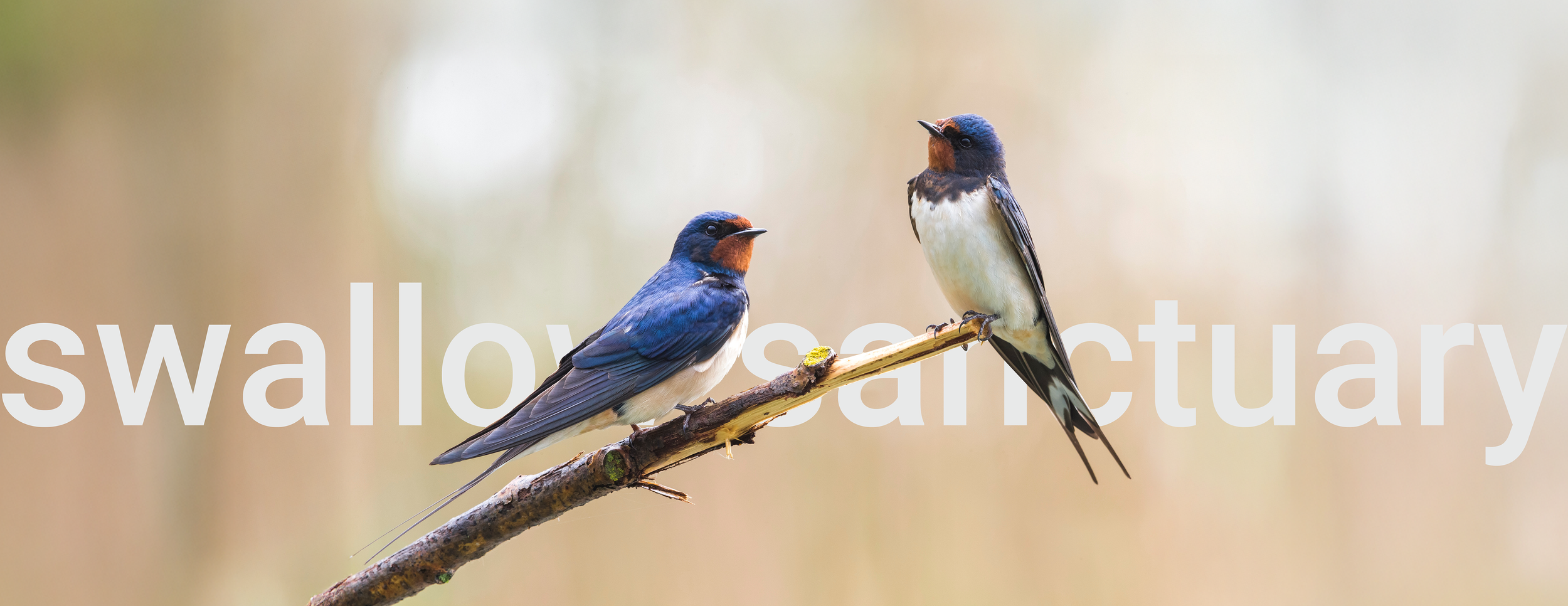
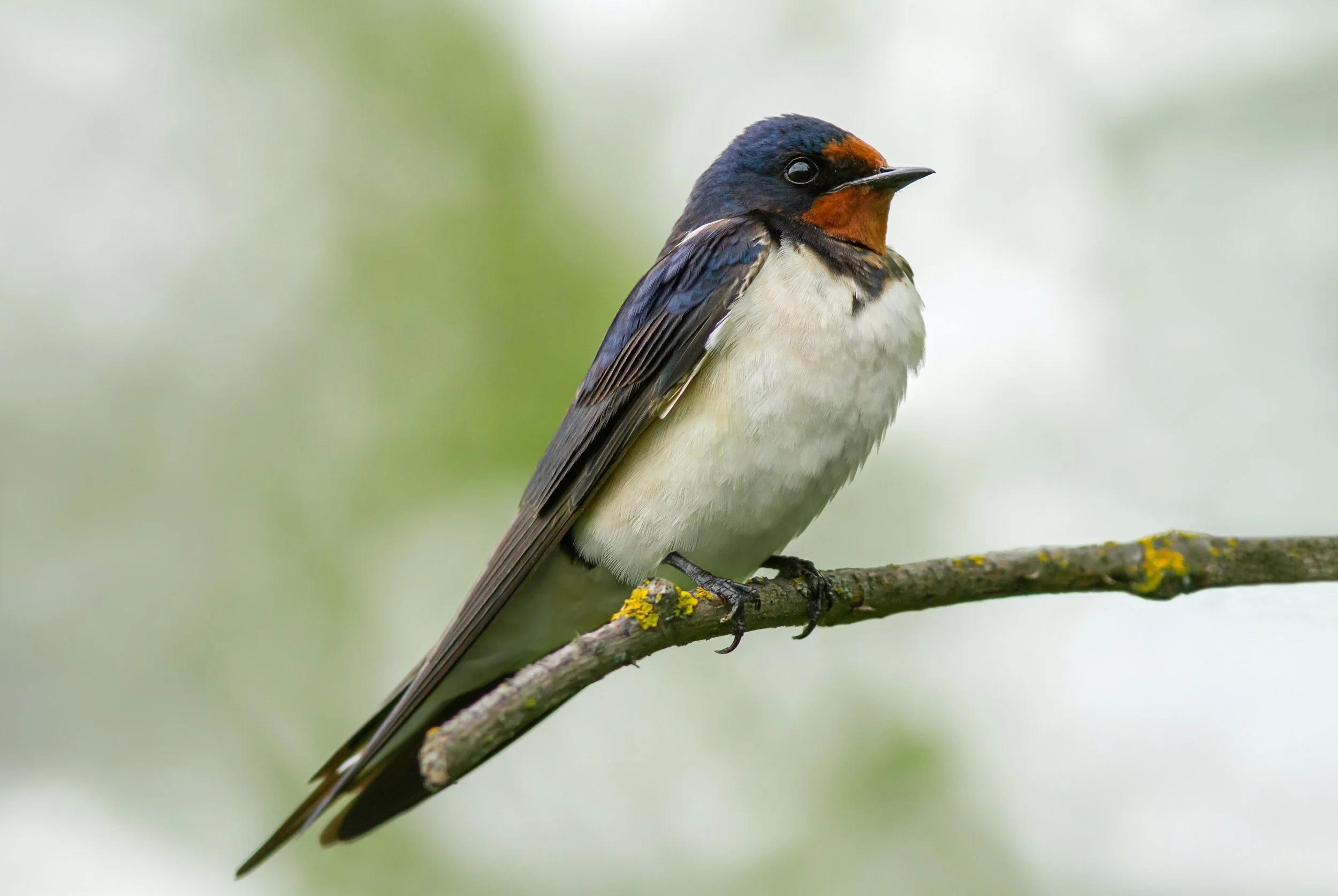
The common barn swallow (Hirundo rustica) is a fascinating fowl with unique nest-building habits. In North America, nesting season for barn swallows begins in late April and early May, laying their eggs sometime in May.
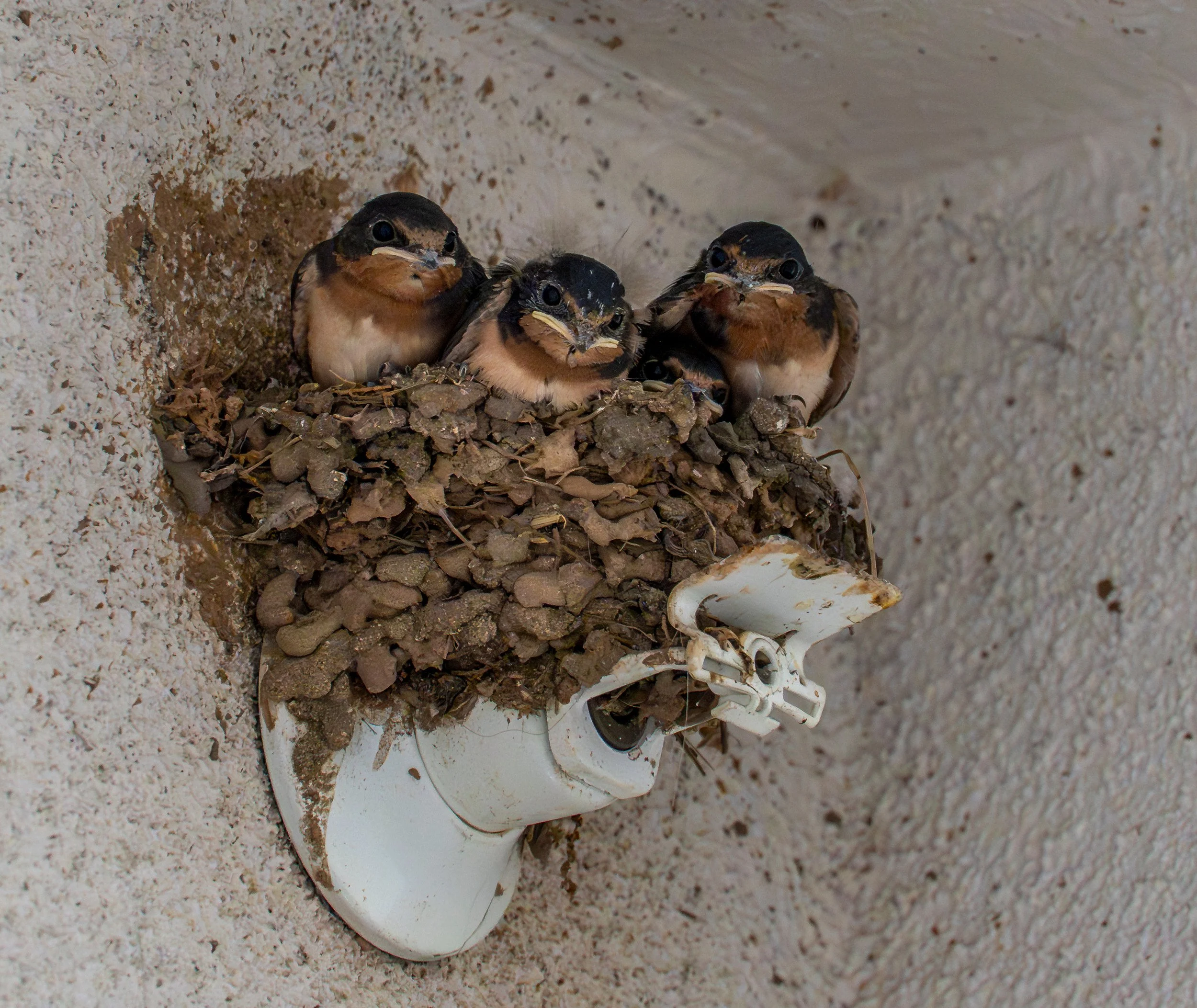
When building their nests, male and female barn swallows work together, gathering mud from nearby water sources to form small mud “bricks.” These “bricks” form the base of their nest and are attached to human-made structures, preferably directly under some type of cover that provides shelter from the weather. Here, they stack their mud “bricks” to form a cup-like nest. Once the outer structure has been formed, the barn swallows line the inside of the nest with grass and feathers. This unique strategy produces some sturdy nests that can last for years (Birdfact).
Because barn swallows choose to nest on human-made structures, their nests are often at risk of being destroyed as humans find their nests messy or ruinous to their property. In reality, the nests can be ruinous if formed on fixtures such as electrical outlets, but these hard-working birds certainly should not lose their nests simple because they look messy.

visual brand language
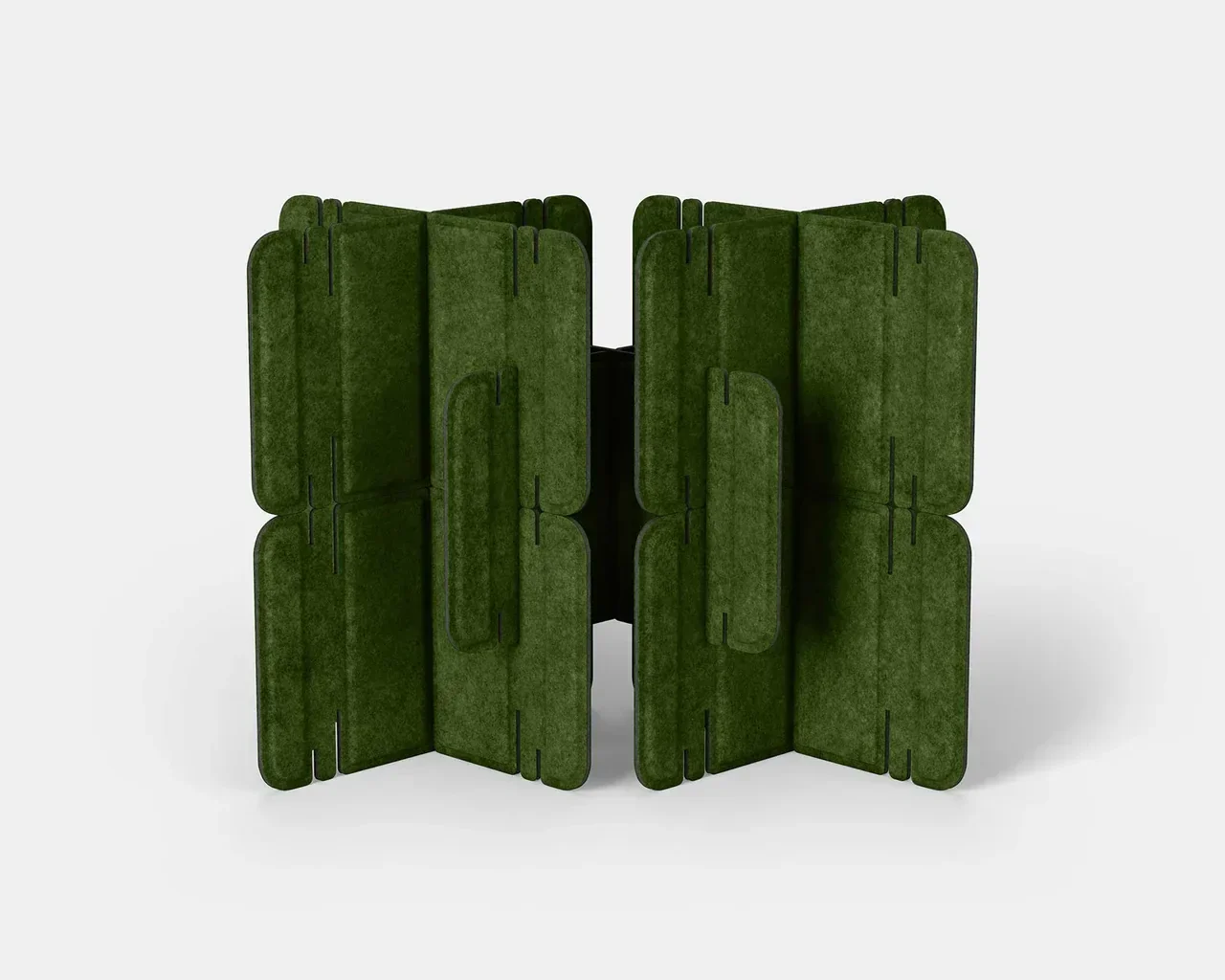
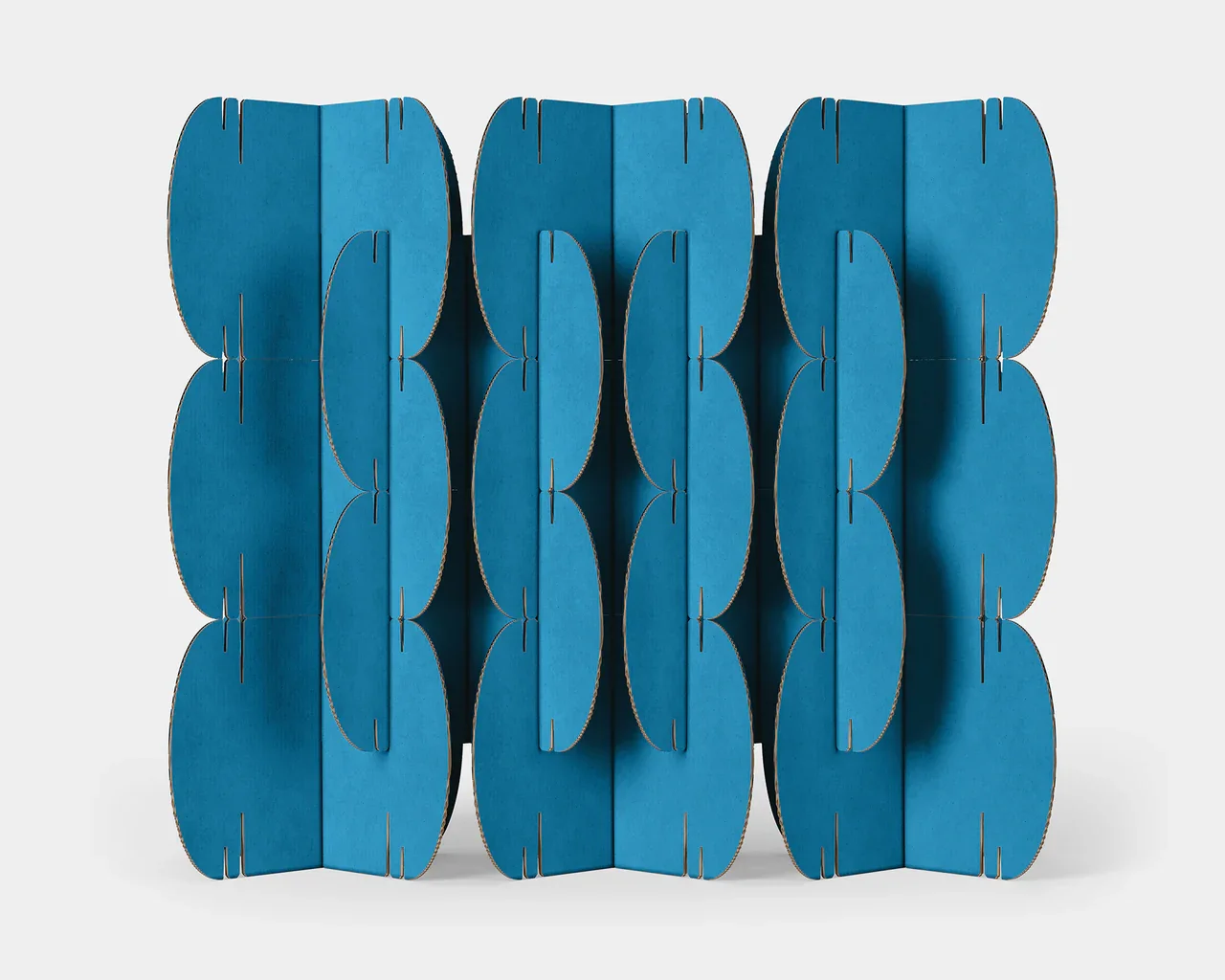
A major requirement of this assignment was designing for a specific brand, following brand language closely. I worked with the brand Mio Culture, focusing on their dedication to disassembly and repair, modularity, and easy-to assemble products.
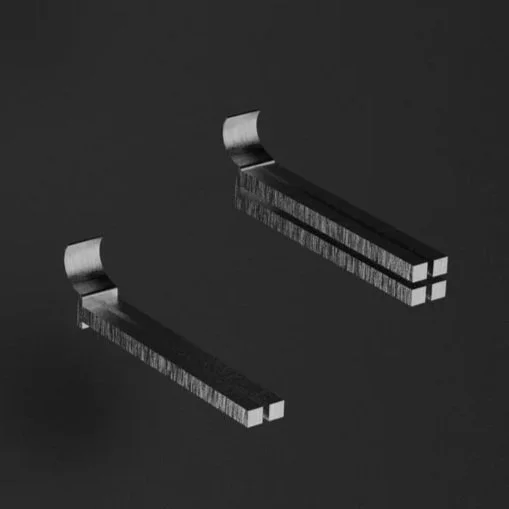
Below you can see the Mio Culture products that my final design is inspired by.

constraints
SIZE | 12 x 12 x 12
BUDGET | $60
BRANDING | Must align with visual brand language of Mio Culture.
ECOLOGY | Must be designed to satisfy two ecological design approaches.
USER | Must be designed for a specific North American bird.
disassembly & repair
ECOLOGICAL DESIGN APPROACH NO. 1
According to The Sustainability Directory, Disassembly & Repair is “the practice of designing products for easy, non-destructive separation and subsequent functional restoration, extending service life against planned obsolescence” (Sustainability Directory).
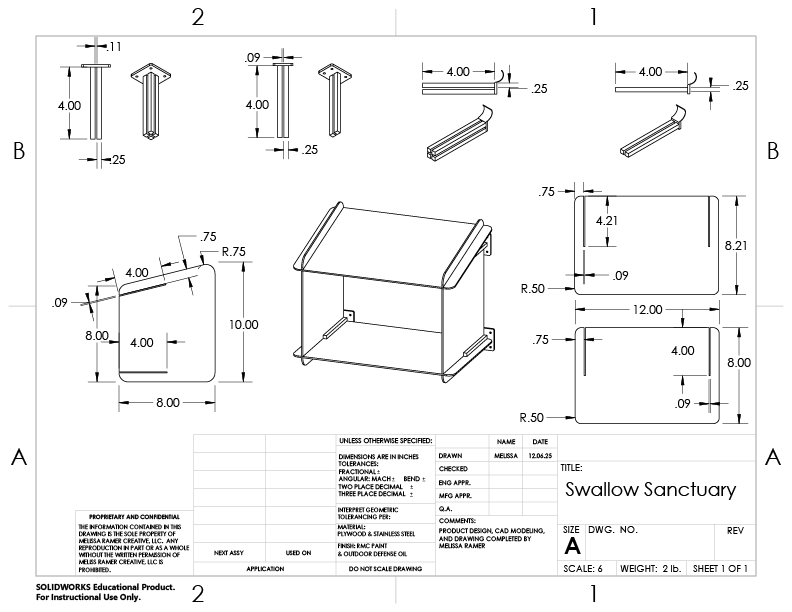
The Swallow Sanctuary is intentionally designed with few pieces that easily fit together without the need for tools. Each piece is designed to be removed easily if damaged, allowing for replacement of parts instead of purchasing of a whole new product. In this way, the Swallow Sanctuary can last as long as the barn swallows’ sturdy nests themselves.
behavioral change
ECOLOGICAL DESIGN APPROACH NO. 2
Behavioral change is the altering of long-term habits and behaviors (Positive Psychology). When this is paired with intentional design, the outcome is products, services, or systems which assist users in changing their behaviors (CoDesign Collaborative). Successful behavioral change designs result in long-term habits and behaviors.
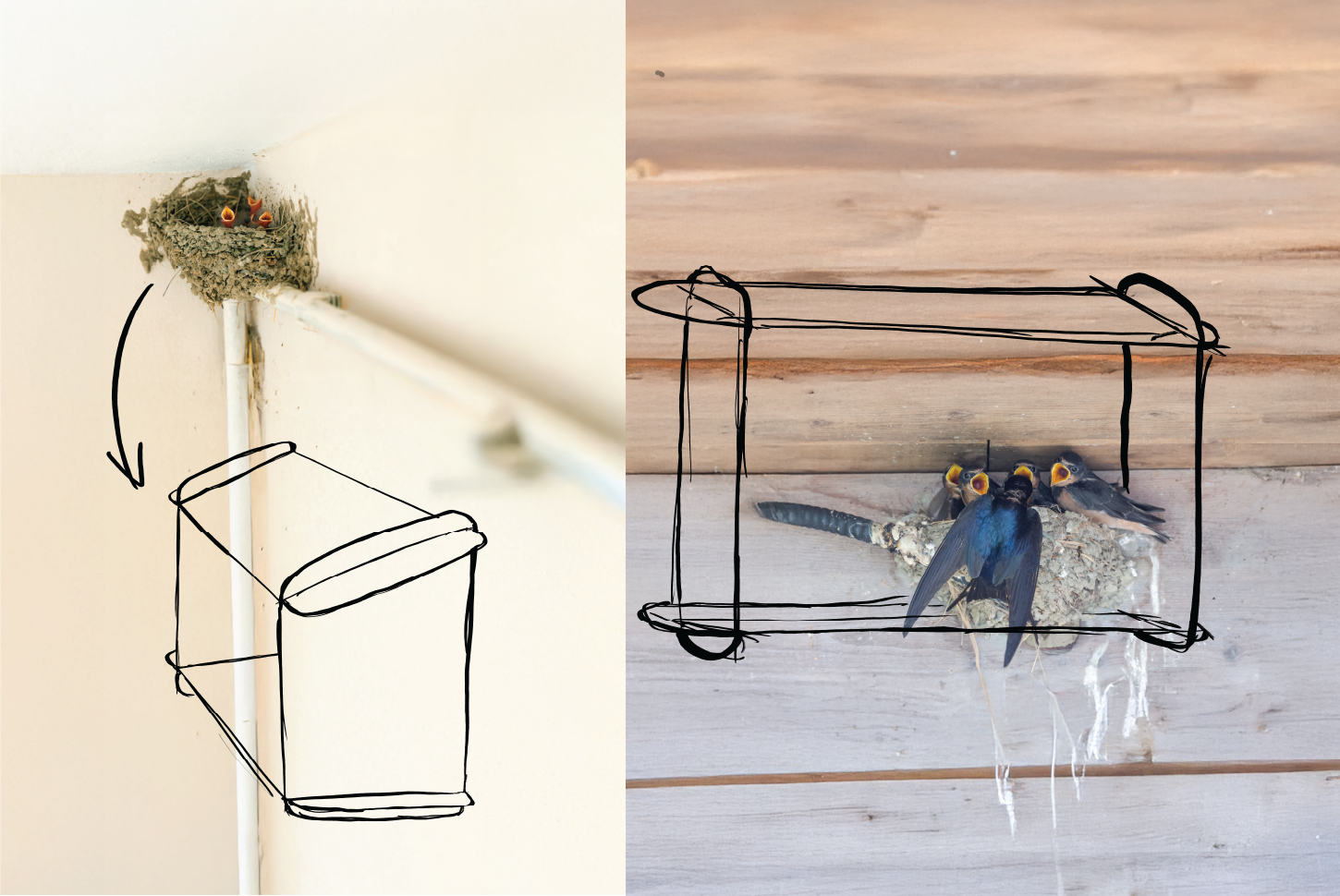
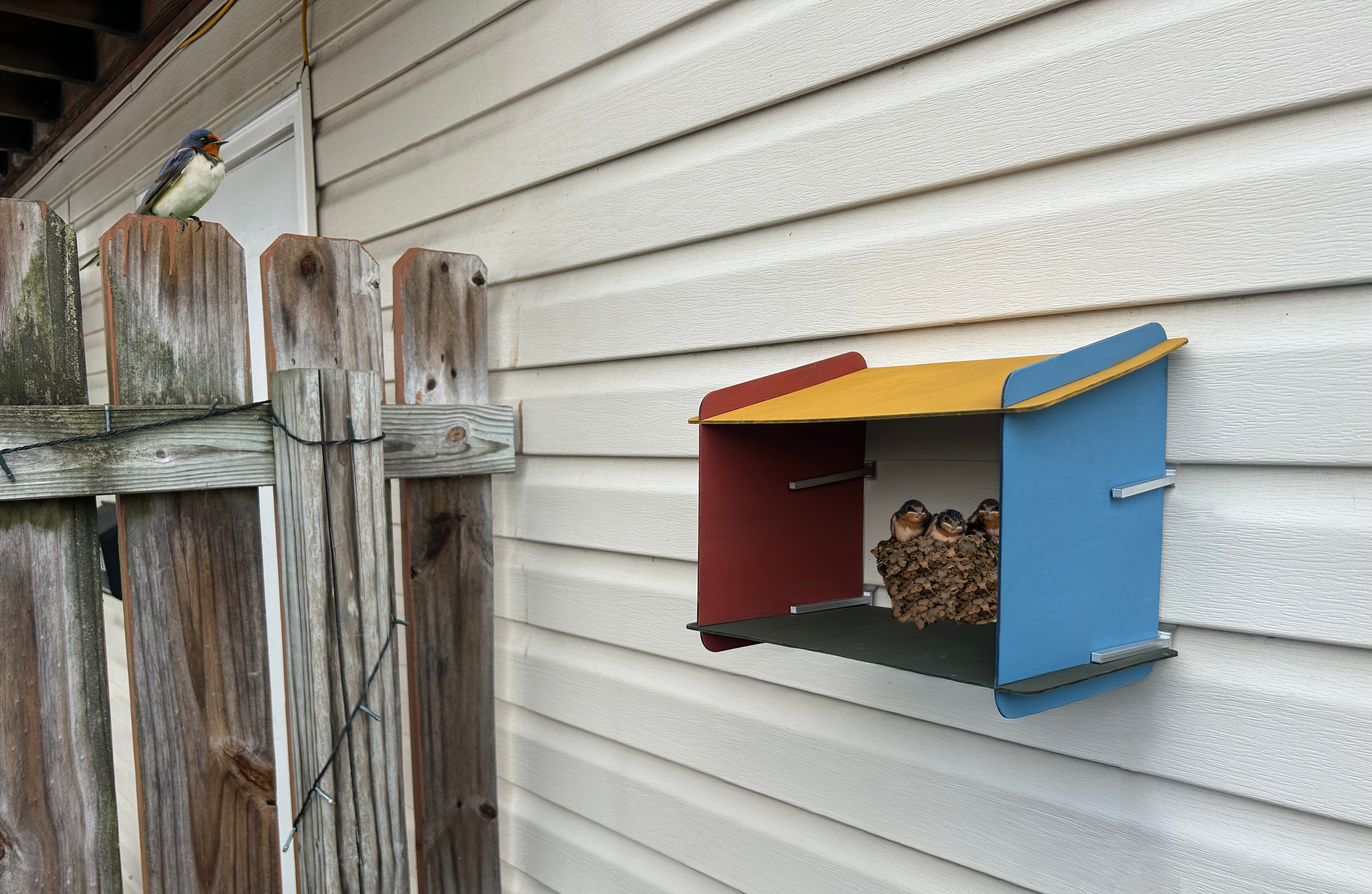
In response to homeowners destroying barn swallow nests in order to protect their property, the Swallow Sanctuary provides a solution that allows humans and barn swallows to coexist. Because of its open-back design and bracket options, the sanctuary can either be placed near or around existing barn swallow nests. If placed near a nest, one can physically move the nest into the sanctuary at the end of the nesting season, influencing the barn swallows to nest in the sanctuary in the coming season. If the barn swallow is not nesting in a place that may potentially damage property, one can simply place the sanctuary around the existing nest to reduce mess and result in what appears to be an intentionally provided nesting area.
swallow sanctuary
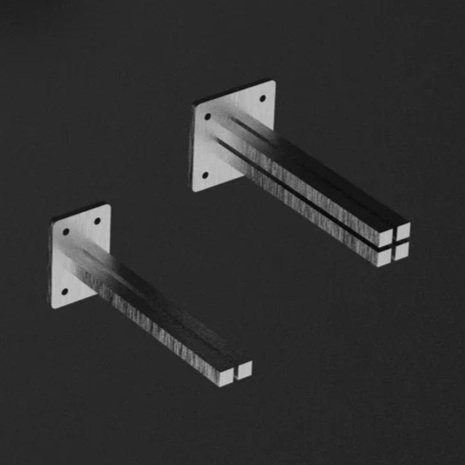
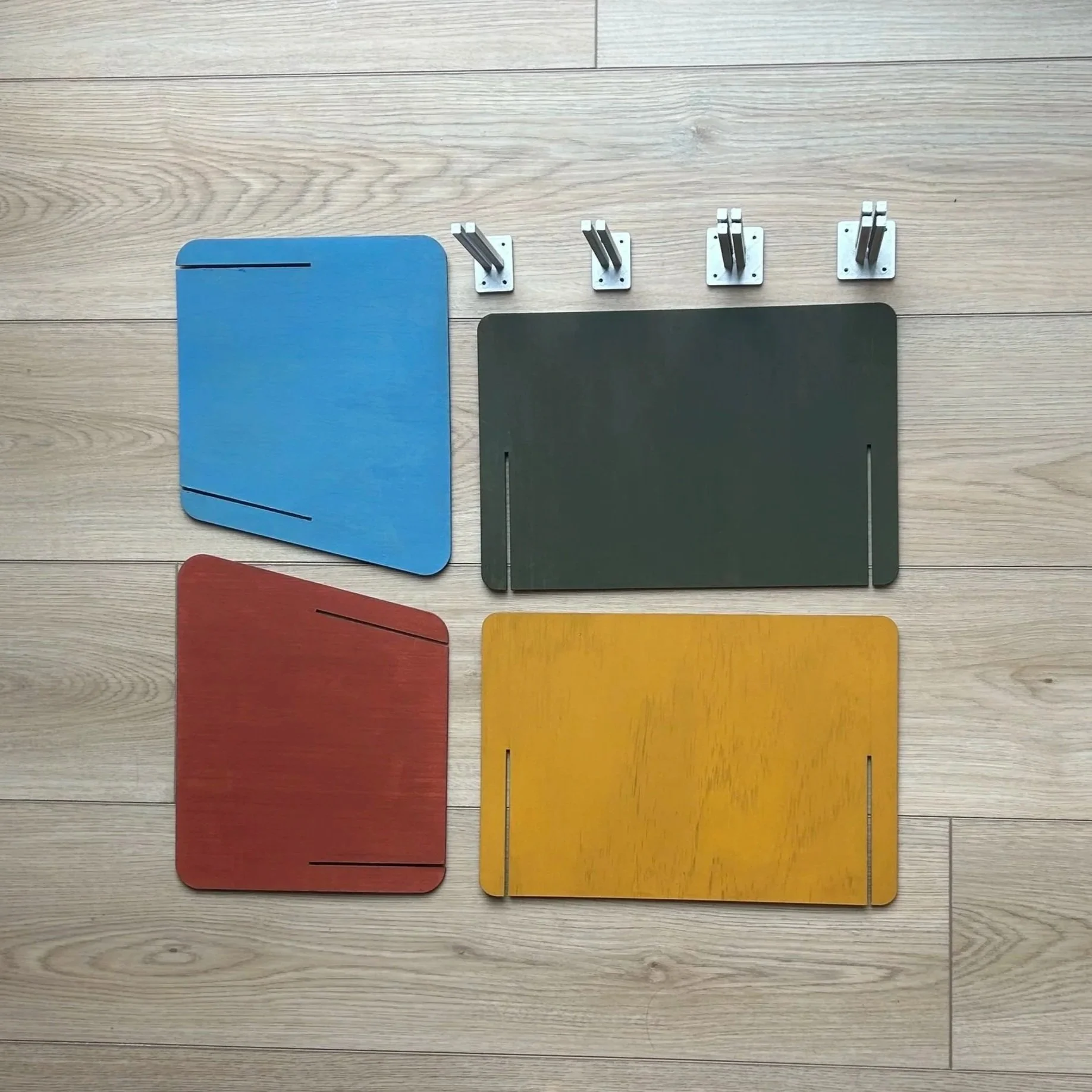
Designed for use on any building, this kit comes with eight easy-to-assemble pieces. If attaching to siding, the kit comes with siding hooks which are designed to sustain the weight of the sanctuary as well as the weight of birds and their nest. If attaching to wood, bricks, etc., the kit comes with brackets that can be fixed to the wall using screws and a drill.
works cited
“Barn Swallow Nesting (All You Need to Know).” Birdfact, February 2, 2023. https://birdfact.com/articles/barn-swallow-nesting.
Bucher, Amy. “The Art of Designing for Behavior Change.” CoDesign Collaborative, October 28, 2021. https://codesigncollaborative.org/art-of-designing-for-behavior-change/.
“Disassembly and Repair → Term.” Sustainability Directory, June 10, 2025. https://product.sustainability-directory.com/term/disassembly-and-repair/.